
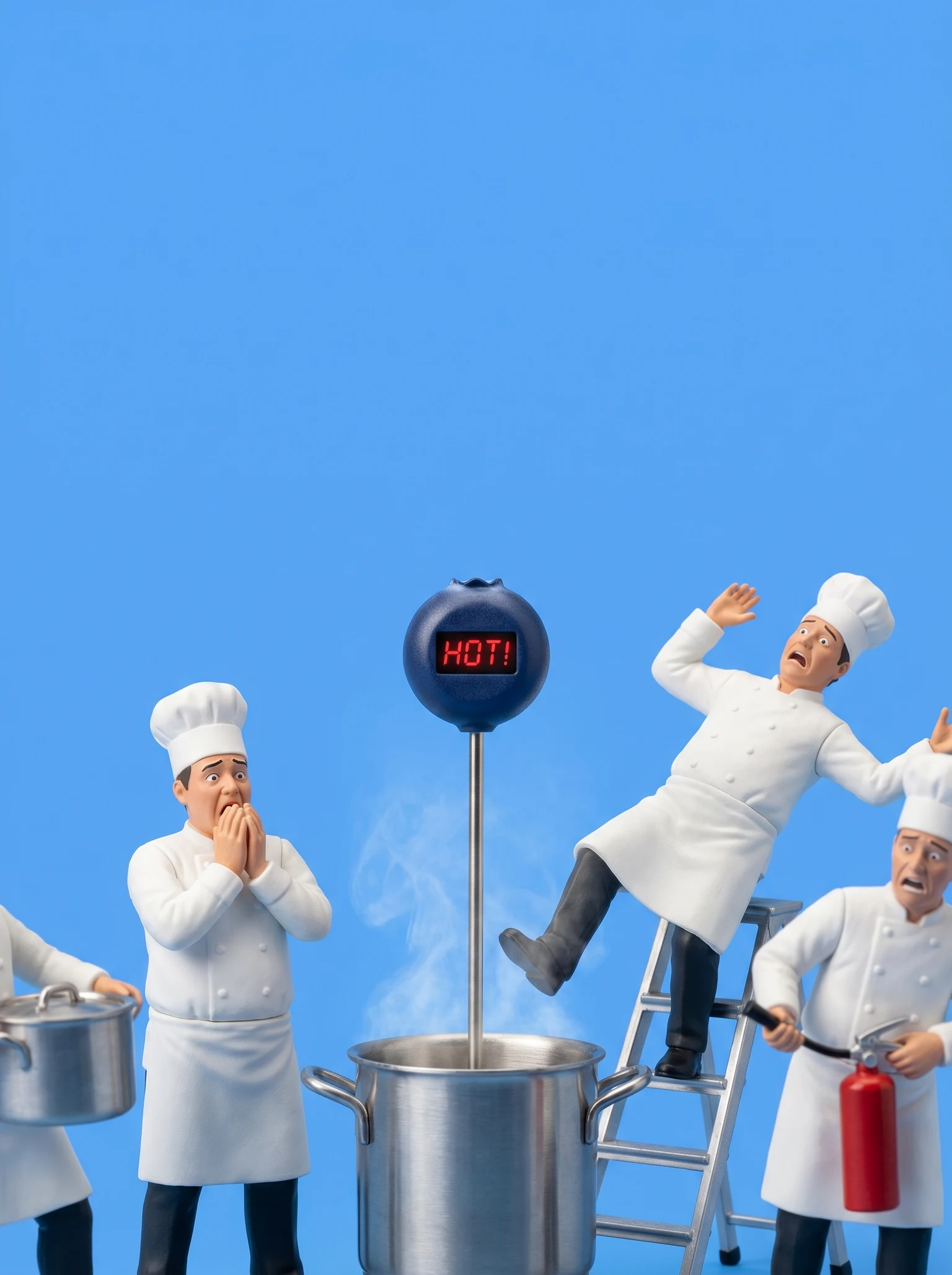
What do a chef and an edible thermometer have in common?
Imagine a chef who can precisely determine when a soufflé is perfectly cooked... from the inside. No, we're not suggesting chefs risk their health, but MIT's technology could bring us closer to that reality.
The breakthrough: Swallowable thermometers
A team at MIT has developed an ingestible capsule, the size of a blueberry, that measures core body temperature from within. With an accuracy of 0.01°C, it could revolutionize how we understand internal temperature, crucial for medical diagnostics and other uses.
Applications in Restaurants and Food
In the restaurant industry, safety and precision are paramount. Here's where these tiny sensors could make a huge impact:
- Cooking control: While we're not going to swallow sensors with every bite, we could adapt this technology to monitor the internal temperature of complex dishes as they cook, ensuring safe temperatures are reached and maintained.
- Storage and preservation: Similar sensors could be used to monitor storage temperatures in perishable foods, ensuring freshness and preventing waste.
- Food Safety: In a world where food contamination is a constant concern, knowing that temperature remains consistent and safe can be a lifesaver for both customers and businesses.
How would we do it at TEEM?
At TEEM, our goal is to bring innovative technology to traditional industries. We can design custom solutions that integrate these sensors into cooking and storage management systems, automating alerts and reports to ensure the highest quality and safety.
Whether incorporating AI agents that analyze temperature patterns to predict failures or adapting software that seamlessly integrates into a restaurant's daily operations, the potential is limitless.
The future of cooking is now
Perhaps the next time you visit a restaurant, the chef won't need a traditional thermometer. They might be monitoring their masterpiece with a device inspired by this MIT breakthrough, ensuring each dish is perfect in every detail. Innovation doesn't wait, and in the kitchen, only taste competes with precision.
Original source: MIT News