
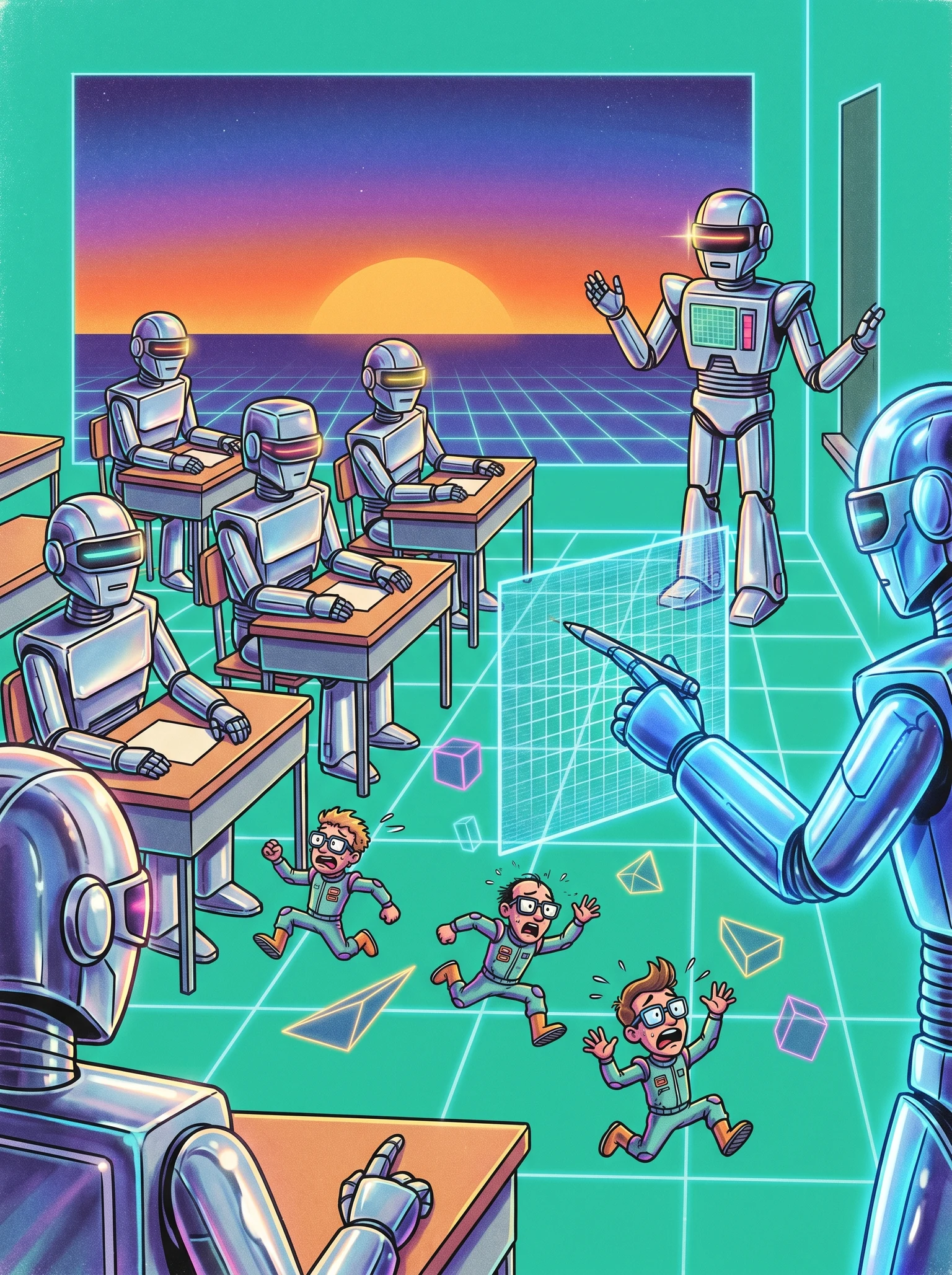
While in one corner of the academic ring teachers battle against chronic student boredom, in the other corner, a lineup of AI robots is warming up to enter the fray. For those who think the education and health sectors operate in parallel universes, it may be time to think again. The HealthTech sector, with its projected advances and consolidations by 2026, offers invaluable lessons on integrating technology to tackle structural challenges.
What happened in HealthTech?
In 2026, the medical technology sector enters a phase of maturity, transitioning from speculative growth to an era of profitable efficiency and clinical validation. HealthTech mergers and acquisitions experience an acceleration, driven by private equity capital overhang and stabilized interest rates. With a focus on AI-integrated platforms, buyers seek solutions that offer demonstrable ROI and reduce administrative costs.
Application in the education sector
So, how does this translate into the educational realm? For starters, institutions could learn from the adoption of integrated technology platforms that HealthTech promotes. Just as hospitals seek to automate their operations, universities and schools can empower themselves with systems that optimize administration, from enrollment management to student performance tracking.
- Automation of administrative processes: Simplifying repetitive tasks like enrollment, grading, and course scheduling can free teachers to focus on teaching.
- AI in the classroom: Systems that personalize learning according to each student's needs can improve educational outcomes.
- Cost reduction: Implementing technology that optimizes resources can turn institutions into models of efficiency.
Once, schools were small technological islands. Today, they could be part of a global educational archipelago where technological integration is not just desirable but crucial.
At TEEM we see it this way
At TEEM, we believe education can benefit from a similar approach to HealthTech. With our expertise in custom software and AI agents, we can develop tools that integrate academic and administrative systems, creating a smarter and more agile educational ecosystem. Imagine software that not only records grades but analyzes learning trends and suggests personalized interventions.
Our team is ready to bring this vision to educational institutions looking to leap toward modernity and efficiency.
Conclusion
It's not about replacing the human touch in education but enhancing it. The HealthTech lesson is simple: technology, well integrated, is not the enemy but the ally that can transform challenges into opportunities.
Original source: Healthcare Digital