
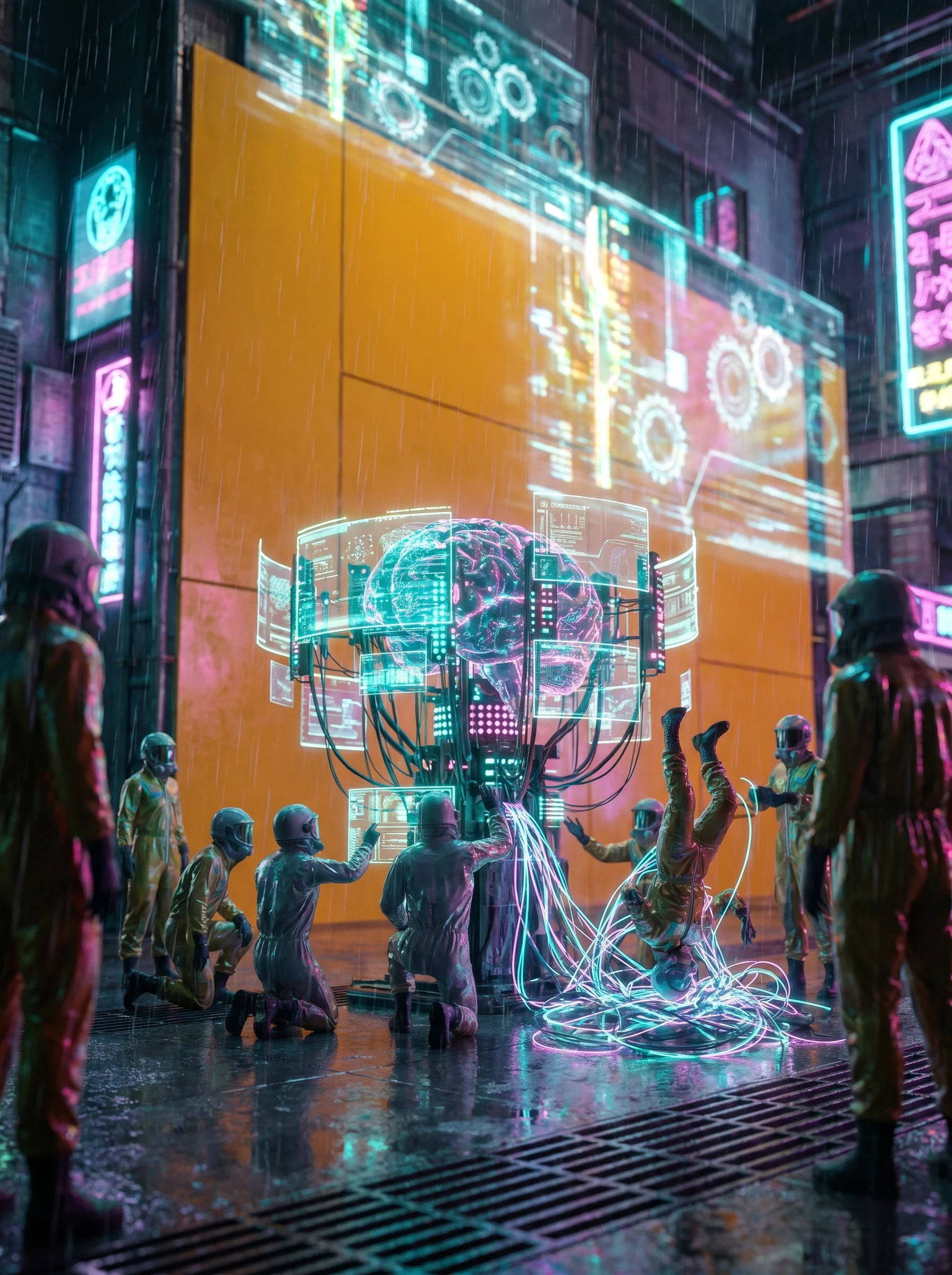
The Future of Manufacturing: Communication at the Speed of Thought
Imagine a factory where employees can "talk" to machines and adjust processes just by thinking about it. No, it's not science fiction; it's what the brain-computer interface (BCI) technology promises, which has given a voice back to people with severe paralysis. And how do we apply this in manufacturing? Let's break it down.
The News Giving Us Hope
Researchers at the University of California have developed a brain-computer interface that allows a patient with severe paralysis to communicate from home without constant technical support. This breakthrough is possible thanks to implanted electrodes translating neural activity into text and cursor control, achieving smooth communication. In numbers: 56 words per minute and 99% accuracy in structured tests.
Practical Applications in Manufacturing
Now, let's bring this marvel to the manufacturing world. On a production line, the ability to send commands directly from the brain to machines could reduce human errors and increase efficiency. Imagine an operator adjusting a machine by merely "thinking" about the necessary change. This not only saves time but allows for immediate problem response without physical interaction.
And that's not all. BCI could facilitate communication between operators in a noisy plant, where it's often hard to hear. "Silent conversations" could better coordinate processes, improve safety, and optimize workflow.
For workers with physical disabilities, this technology would be life-changing, enabling them to perform tasks that were previously impossible or dangerous.
How We Make It Possible at TEEM
At TEEM, we're ready to integrate customized BCI solutions in manufacturing environments. Our teams can develop tailor-made software that leverages this technology to improve plant communication, efficiency, and safety. Plus, with our ability to deploy software in days, factories can benefit from these innovations without long wait times.
The Immediate Future
While we're still in the early stages of this technology, the possibilities are almost limitless. The brain-computer interface could mark a before and after in manufacturing, just as it has in the medical field. So, while you're still waiting in line for your coffee, imagine a world where your ideas turn into actions with just a thought.
Original source: Diario Libre (EFE)