
From Operating Room to Farm: The Potential of Drones
Imagine a future where a drone that once carried a kidney now delivers fresh produce from the field to your table. This isn't science fiction; it's technology that's already here. The recent collaboration between UNOS, NASA, and LifeNet demonstrated how drones can safely transport organs, paving the way for numerous possibilities, even in the agro-food industry.
What exactly happened with organs and drones?
Teams from the United Network for Organ Sharing, NASA's Langley Research Center, and LifeNet Health conducted test flights to transport human kidneys via drones, successfully maintaining their integrity. During approximately 15-minute flights, they monitored temperature, pressure, and altitude, finding no damage to the organs. The takeaway: drones are no longer just toys or video tools; they're a reliable medium for critical missions.
Drones in the Agro-Food World: From Field to City
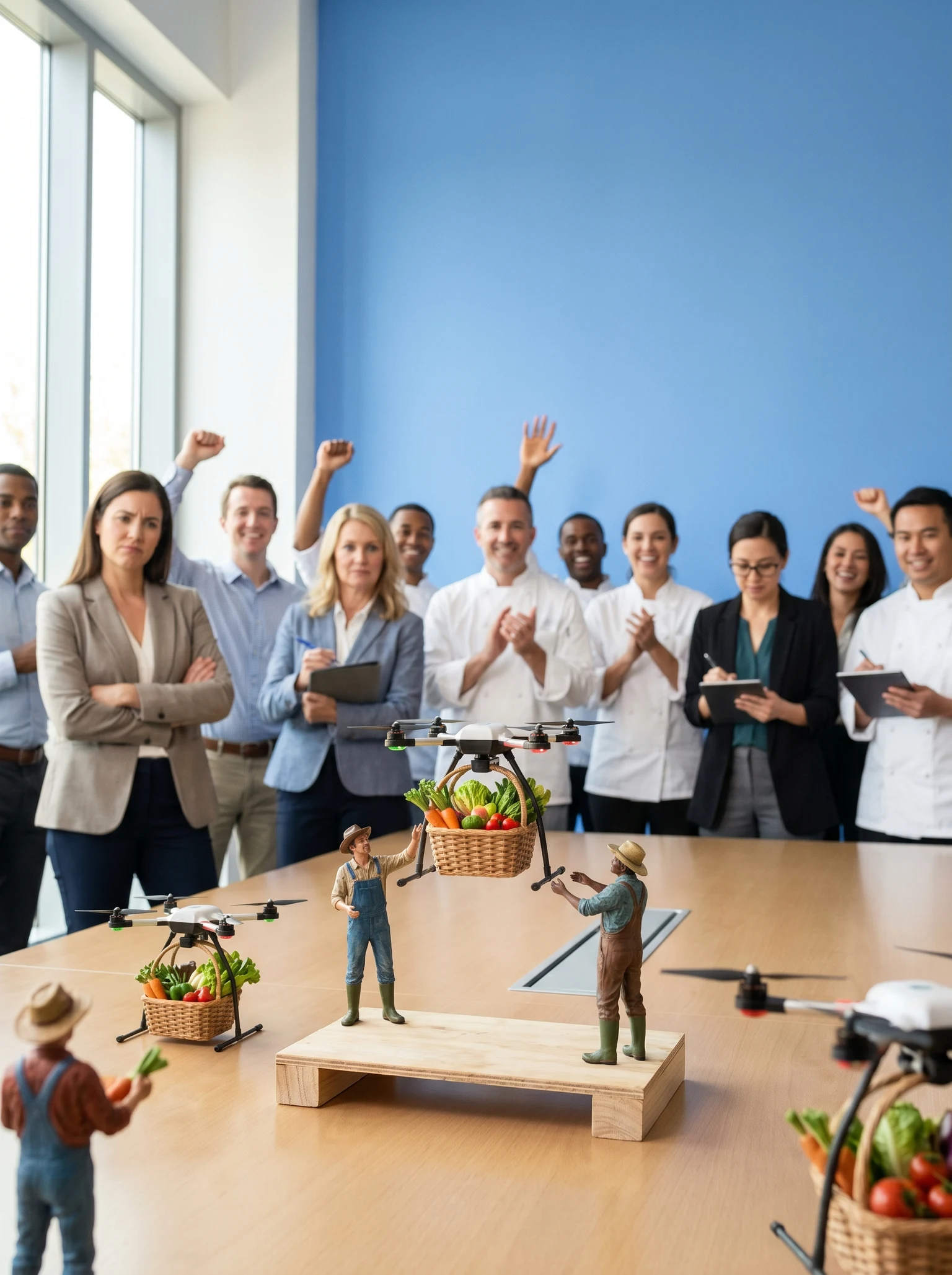
While organ transport is vital, logistics in agriculture and food are equally crucial. Imagine your fresh products being picked and delivered within hours, maintaining freshness and even reducing transportation costs. Drones could revolutionize the supply chain in agriculture, from direct delivery to consumers to optimizing inventory management in supermarkets.
Sky-high transportation: Farms could use drones to bring products directly to markets, reducing intermediaries and increasing efficiency.
Crop monitoring: Beyond transport, drones can be equipped with sensors to monitor crop health, optimizing water and nutrient use, and improving yields.
In summary, the use of drones in agriculture and food not only promises to improve logistical efficiency but also offers sustainable solutions that could transform the agricultural landscape.
TEEM's Perspective: Tailored Technology
At TEEM, we're passionate about bringing these technological innovations to the real world. Our teams are equipped to develop custom software that integrates drones into existing agro-food logistics systems, improving not just delivery speed but operational efficiency. Imagine an automated system that manages collection and delivery with surgical precision, saving time and money.
Using AI agents, we could optimize routes, adapting to variables like weather or air traffic, ensuring each product arrives in optimal condition.
Closing with an Eye to the Future
The drone technology proven in the medical world holds a promising future in the agro-food industry. With advances in logistics and the integration of artificial intelligence, the sky is the limit. And who knows, maybe soon a drone will be dropping your fruit basket at your doorstep.
Original source: UNOS